
No Second-Class Members: Building Up the Body of Christ
By Jon Beaty
Do you remember the first time you were the new kid?
I was in second grade. My family had just moved from a noisy apartment in Southern California to a brand-new home in a suburb of Mission Viejo. I was thrilled—no more freight trains rattling my bed at night, no more dodging neighborhood bullies in the apartment commons. But the first day at my new elementary school crushed me with anxiety. I didn’t know a soul. Overwhelmed, I crawled under a table and cried, begging my teacher to call my mom to take me home. I don’t remember her name or her face, but I remember her kindness. She listened, calmed my fears, and helped me stay until the final bell. The next day was easier. Soon I had friends, and school felt like home.
Years later the tables turned. As head boys’ counselor at Big Lake Youth Camp, I became the person new campers turned to when homesickness hit. Their unit counselor would send them my way, tears streaming. I’d sit with them, let them talk and cry, then ask two simple questions: “What were you most looking forward to before you came to camp?” and “Why don’t we go find your unit and try that one thing—just for today?” Most agreed. Minutes later they were back with their group, laughing, making friends, and fully engaged in camp life by week’s end.
Those childhood moments taught me something profound that applies directly to church life today: newcomers need someone who has been there longer to extend the hand of genuine friendship first.
Too often in our congregations we unconsciously treat long-time members as if they have greater rights and privileges. The “old-timers” sit in the same pews, serve on the same committees, and hold the same leadership roles—while new members hover on the edges, feeling like the anxious second-grader or the homesick camper. They may not cry. They may not beg to go home. But they often feel lonely, sized up, or overlooked. Scripture is crystal clear: in the body of Christ, there are no second-class citizens.
The apostle Paul wrote to the Galatians, “There is neither Jew nor Gentile, neither slave nor free, nor is there male and female, for you are all one in Christ Jesus” (Galatians 3:28, NIV). He told the Ephesians that new believers are “no longer foreigners and strangers, but fellow citizens with God’s people and also members of his household” (Ephesians 2:19, NIV). The moment someone is baptized into the Seventh-day Adventist family—whether they are a lifelong Adventist transferring from another church or a brand-new believer fresh from Bible study—they are full members of the household of God. Period.
Paul drives this home with the powerful metaphor of the body of Christ in 1 Corinthians 12. He says the church is “one body” made up of many parts, and “if one part suffers, every part suffers with it; if one part is honored, every part rejoices with it” (1 Corinthians 12:26, NIV). No organ tells another, “I don’t need you.” The foot is not less important because it isn’t the eye. In the same way, the newest member is not less important—or less qualified—than the member who has warmed the same pew for thirty years. Long-time members do not earn greater rights or privileges by their longevity. Instead, Scripture places a holy responsibility on the more mature believers to initiate genuine friendship, build authentic relationships, and actively draw newcomers into the full life of the body.
Jesus modeled this perfectly. He never waited for people to prove themselves worthy of His table. He ate with tax collectors and sinners. He called fishermen, zealots, and even a despised tax collector to be His closest disciples—then immediately gave them responsibility in His kingdom work. The Great Commission itself is a command to “go and make disciples… teaching them to obey everything I have commanded you” (Matthew 28:19-20, NIV). Making disciples doesn’t stop at baptism. It begins with friendship, listening, encouragement, and then sharing life and leadership together.
James warns us against showing favoritism in the church: “My brothers and sisters, believers in our glorious Lord Jesus Christ must not show favoritism” (James 2:1, NIV). When we unintentionally reserve power and relationship for long-time members, or size up newcomers for what they can do for “our” church, we violate this command. The “new kid” who shows up nervous and unsure needs exactly what that second-grade teacher gave me and what I tried to give those homesick campers: someone who listens with no hidden agenda, someone who remembers what it felt like to be new, and someone who says, “Let’s be friends.”
So what does that look like practically in our local Adventist congregations?
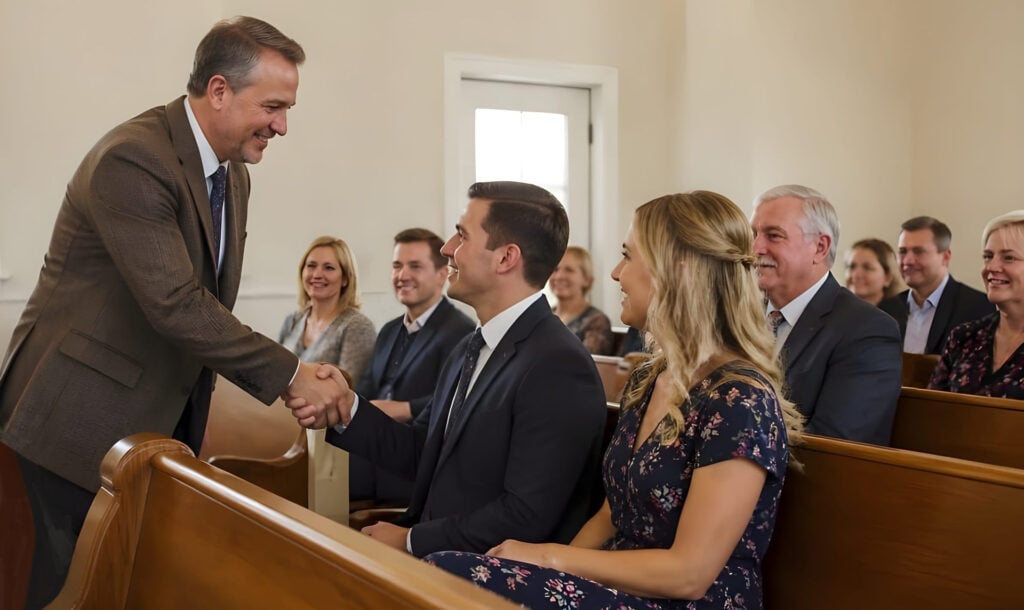
- Build true friendship first. Don’t wait for the newcomer to approach you. Walk across the room, introduce yourself with a warm smile, and genuinely invite them to share their story: “I’m curious—how did you come to join us today?” Do this with no hidden agenda other than to know them as a brother or sister in Christ. Treat them like an honored guest in your own home, not a potential volunteer or project. Jesus said, “As you’ve done it to one of the least of these, so you have done it unto me” (Matthew 25:40, NIV).
- Listen with care. Just like the counselor at camp, let them talk. Hear their hopes, their fears, their past church experiences, and their gifts. True friendship starts with listening, not fixing or recruiting.
- Nurture the relationship into fellowship. As real friendship grows, invite them naturally into the life of the church: “We have a Bible study group that meets Friday evenings—would you like to join us as friends?” or “A few of us are helping with children’s Sabbath School next month—could you pray about joining us?” Share life together before sharing tasks.
- Support full engagement as family. When the time is right, encourage them to use their God-given gifts in service and leadership. Nominate new members for church board, nominating committee, or other roles—not because they’ve “earned” it through longevity, but because the Holy Spirit equips every believer (1 Corinthians 12:7). Long-time members share power and responsibility not as a concession, but as an expression of genuine love and unity in the body.
When long-time members embrace this biblical mandate of authentic friendship first, something beautiful happens. Newcomers stop feeling like outsiders or resources to be used. They become fully engaged parts of the body—using their talents, growing in faith, and eventually reaching out to the next new person. The church grows stronger, more vibrant, and more like the family God designed it to be—a place where true friendship is not in crisis, but alive and overflowing.
Next Sabbath, look around the sanctuary and greet someone you haven’t met. Sit with someone you don’t know during potluck. Invite someone from outside your usual circle of friends to join you for a simple haystack lunch in your home. Who looks a little uncomfortable? Who is sitting alone? Who might be the “new kid” today? Remember how it felt to be that child in a new school, that camper far from home, or a first-time guest in a church. Then do what Jesus would do: extend the hand of genuine friendship first. Your simple act of authentic welcome might be the very thing that helps a new brother or sister stay—not just for one Sabbath, but for a lifetime in the body of Christ.